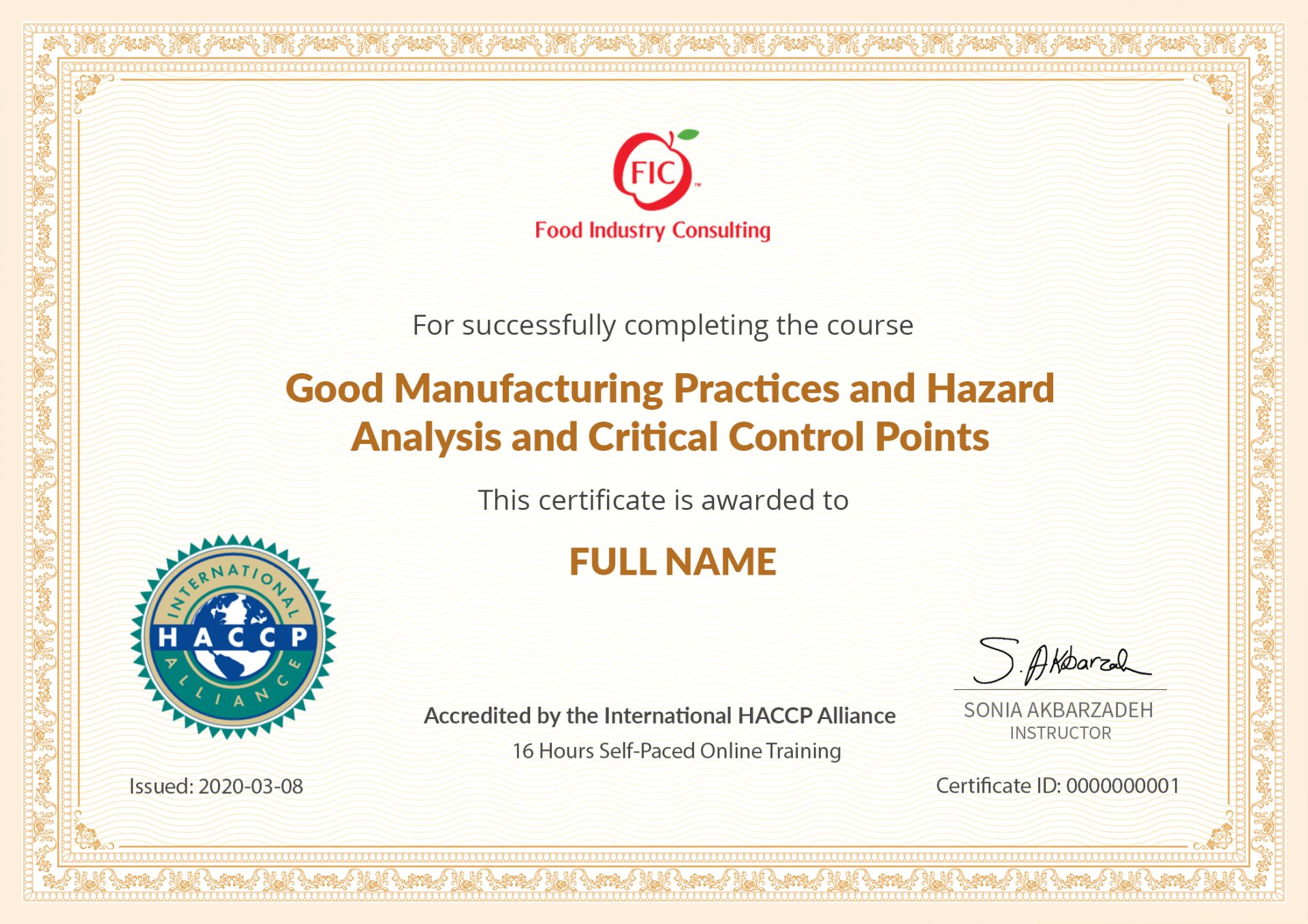
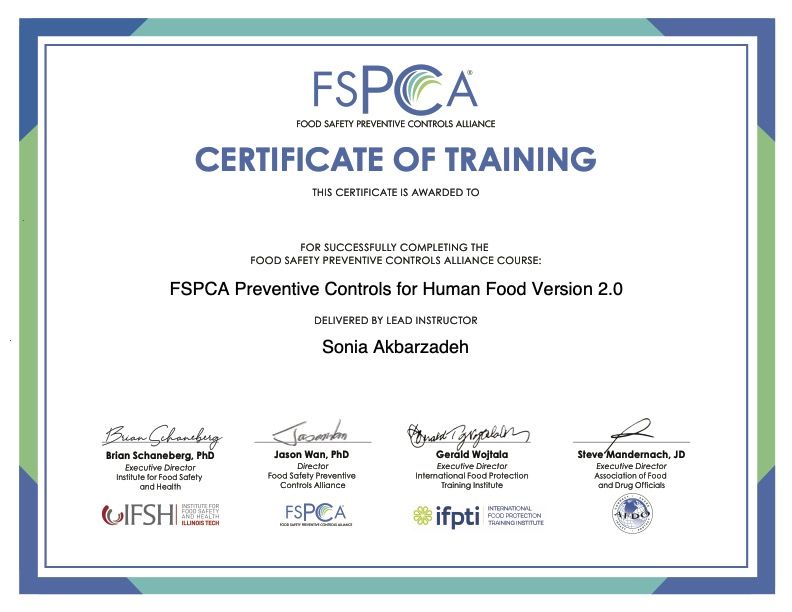
This affordable bundle combines two essential food safety certifications: PCQI 2.0 (FSPCA Preventive Controls for Human Food) and HACCP Certification (International HACCP Alliance accredited), to support FSMA and GFSI compliance while strengthening core food safety knowledge and practical application.
HACCP Certification Training (GMPs + HACCP)
Build a strong foundation in food safety through Good Manufacturing Practices (GMPs), the essential starting point for all modern food safety systems. Learn how GMPs support safe production environments and serve as the basis for HACCP, GFSI schemes, and preventive control programs. Then progress into implementation, where you will learn the 12 steps and 7 principles required to develop and manage an effective plan. This training includes verification and validation concepts and leads to an International HACCP Alliance accredited certificate upon successful completion.
PCQI 2.0 Training (FSPCA Preventive Controls for Human Food)
Become a Preventive Controls Qualified Individual (PCQI) through the FDA-recognized FSPCA standardized curriculum. This updated Version 2.0 training covers current regulatory expectations, enhanced examples, and practical guidance for building and maintaining an FDA-compliant Food Safety Plan. Learn how to apply preventive controls, work through model food safety plans, and develop the skills needed to manage food safety systems effectively. Upon completion, learners earn an official FSPCA PCQI certificate issued by AFDO.
Empty space, drag to resize